The Tactical Overview
Running south from the US border to Cabo San Lucas, the Baja Peninsula is synonymous with off-road racing. However, undertaking a multi-day expedition down the peninsula is fundamentally different from a supported race. The terrain shifts abruptly from hard-packed rocky two-track to bottomless silt beds (fesh-fesh), dry lake beds, and coastal sand washes.
Navigation is heavily dependent on GPS tracks, as physical signage is virtually non-existent once you leave Highway 1. Riders must be prepared to handle long stretches without cellular service, relying on satellite communicators for emergencies.
Lightweight dual-sports or dedicated enduro bikes (350cc–500cc). Heavy adventure bikes will physically break a rider in the deep sand sections. Suspension must be sprung and valved for high-speed impacts.
Aggressive DOT-approved knobbies. Heavy-duty tubes (4mm) running at low pressures (10-14 PSI) with rim locks installed to prevent tearing the valve stem under hard acceleration.
Minimum of 3 to 4 liters of water carried on the rider via a hydration pack, plus electrolyte replacement powders. Dehydration is the primary threat in the desert.
Pre-filters for air intakes are strongly advised. The ultra-fine silt will rapidly clog standard paper filters, starving the engine and potentially bypassing into the cylinder.
Mastering Deep Sand and Silt
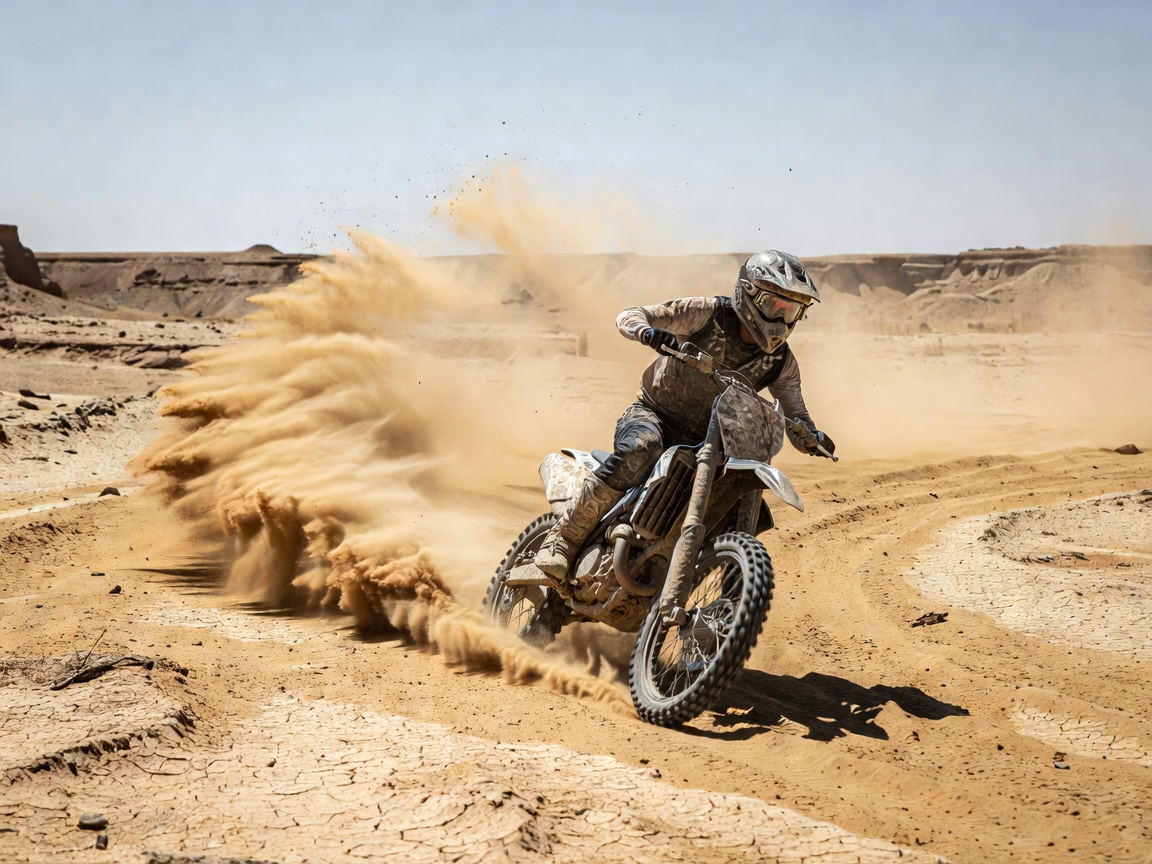
The mechanics of riding deep sand require a counter-intuitive approach: speed is your ally. Momentum keeps the front wheel skimming over the surface. If you chop the throttle, the front end will dive, immediately resulting in a crash. Body positioning must be heavily biased toward the rear of the motorcycle, with the rider standing on the pegs and gripping the tank with their knees.
Silt beds present a unique danger. Often appearing as flat, hard-packed earth, they are actually fine dust that can swallow a wheel to the axle. When hitting a silt bed, maintain steady throttle, keep your weight back, and avoid sudden steering inputs. If riding in a group, spacing is critical; the dust cloud generated by a leading rider can reduce visibility to absolute zero for minutes at a time.
Logistics and Fuel Range
Fuel planning is a mathematical absolute in Baja. You must have a confirmed range of at least 250 kilometers (150 miles) between stops. Oversized aftermarket tanks are mandatory. In remote villages, fuel is often purchased from barrels via hand-crank pumps or plastic jugs; carry a fuel filter sock that sits inside your filler neck to prevent water and debris from reaching your injectors.
Pros and Cons of the Baja Run
Advantages
- True wilderness riding with minimal restrictions.
- A welcoming local off-road culture.
- Incredible geographic diversity, from mountains to isolated beaches.
Disadvantages
- High risk of mechanical failure due to severe vibration and impacts.
- Medical extraction from remote areas can take days if helicopters are unavailable.
- Extreme daytime heat limits the safe riding window during summer months.
Conclusion
Baja is not a casual ride; it is a mechanical and physical stress test. Keep the bike light, carry more water than you think you need, and never ride beyond your line of sight. Respect the desert, and it will reward you with some of the most spectacular off-road riding in the world.