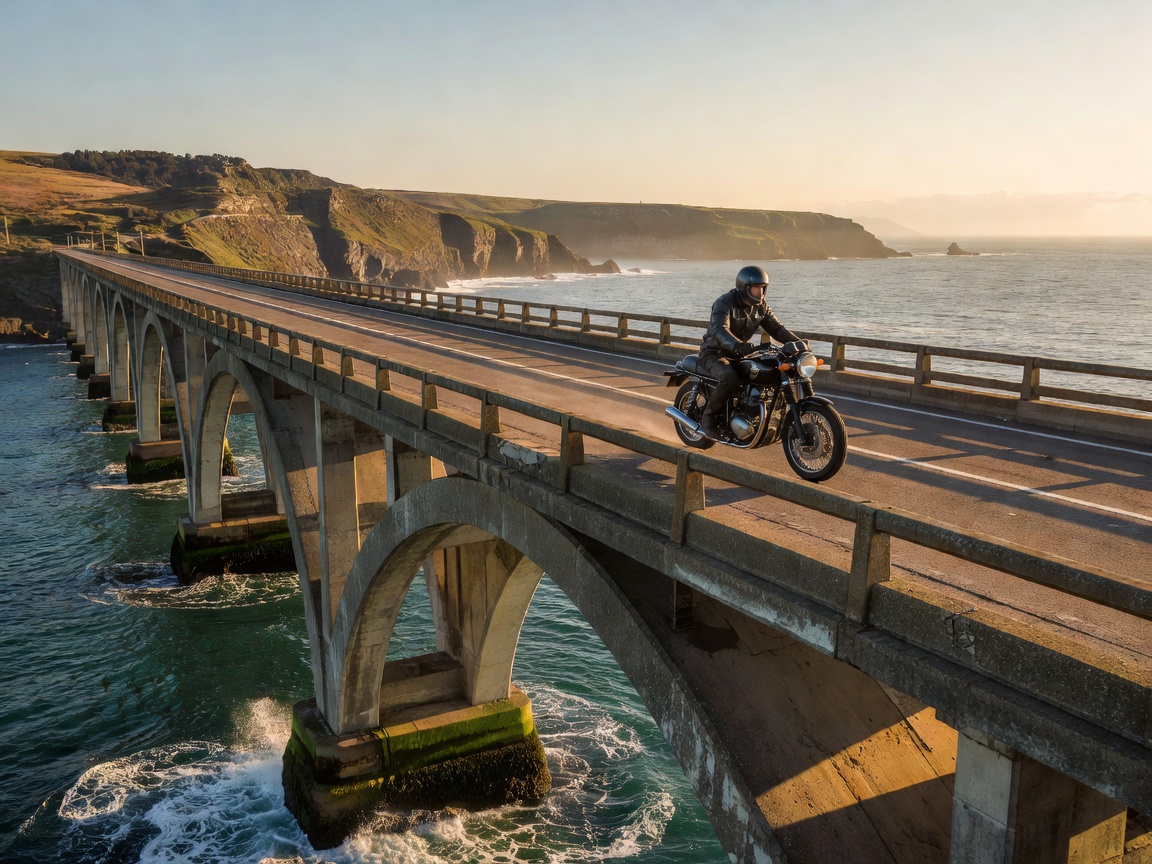
The Tactical Overview
California State Route 1, widely known as the Pacific Coast Highway (PCH), is legendary for its dramatic coastal cliffs, redwoods, and expansive ocean views. However, from a riding perspective, it requires a specific set of tactics to manage the variable road conditions, sudden fog banks, and the high volume of distracted drivers.
The most iconic stretch runs from San Francisco south to Los Angeles, passing through Monterey and Big Sur. We strongly recommend riding North to South; this puts the ocean on your immediate right, affording uninterrupted views and easier pull-offs into coastal overlooks without crossing opposing traffic.
Cruisers, heavy touring bikes, or sport-tourers. Weight is actually an advantage here, providing stability against sudden coastal crosswinds.
A properly adjusted windshield or fairing is critical to reduce rider fatigue. The constant buffeting off the Pacific will quickly exhaust a rider on an unfaired naked bike.
Marine layer fog. Morning riding often involves zero visibility and damp roads. The fog typically burns off by midday, revealing the coastline.
Hard panniers are recommended for security, as you will frequently park at tourist overlooks and leave the motorcycle unattended.
Traffic Dynamics and Spacing
Unlike remote desert runs, the primary hazard on the PCH is other people. Motorhomes (RVs) and rental cars constantly brake abruptly to observe wildlife or scenery. Maintaining a massive following distance is non-negotiable. Furthermore, California law permits lane-splitting (filtering), but executing this on a narrow, twisting coastal two-lane requires extreme caution and is generally not recommended unless traffic is at a dead halt.
Target fixation is a significant risk. The views are intentionally distracting, but the road frequently tightens into decreasing-radius turns with steep drop-offs. If you want to look at the ocean, pull over. Keep your eyes strictly on the vanishing point when the wheels are moving.
Dealing with Road Closures
The geography that makes Big Sur beautiful also makes it unstable. Landslides routinely sever Route 1, sometimes closing sections for months or even over a year. Checking local Department of Transportation (Caltrans) updates daily is mandatory. If a closure occurs, the detours route you far inland via Highway 101, completely altering the nature of the ride.
Pros and Cons of the PCH
Advantages
- World-class scenery and iconic bridges (e.g., Bixby Creek Bridge).
- Abundant high-quality lodging and culinary options.
- Smooth, well-maintained pavement in most sections.
Disadvantages
- Heavy, unpredictable tourist traffic.
- Constant threat of fog and damp conditions in the mornings.
- Vulnerability to sudden road closures due to landslides.
Conclusion
The Pacific Coast Highway is a marathon of sensory input rather than a technical riding challenge. Equip a comfortable machine, layer up for the morning fog, and respect the hazards of heavily trafficked tourist routes. Ridden with patience, it is a magnificent asphalt journey.